10 Key Insights for Building a Natural Language Interface to Spotify Ads API with Claude Code Plugins
Imagine managing Spotify ad campaigns without touching a single line of compiled code. That's the promise of combining Claude Code Plugins with the Spotify Ads API, creating a natural language interface that turns OpenAPI specs and Markdown documentation into a conversational tool. This approach simplifies ad management, allowing marketers to interact with the API using plain English. Below are ten essential insights to understand how this works and why it matters.
1. Leveraging OpenAPI Specs as the Foundation
The Spotify Ads API is described by an OpenAPI specification—a standard format that outlines endpoints, parameters, and data models. By feeding this spec into Claude Code Plugins, you automatically translate API endpoints into natural language commands. For example, instead of crafting a complex HTTP request to fetch campaign performance, you can simply ask, "Show me my top campaigns this week." The plugin interprets the query, maps it to the correct API call, and returns structured data—all without writing code. This foundational step eliminates the need for manual endpoint mapping and reduces the learning curve for non-technical users.
2. Using Markdown Files for Documentation Integration
Beyond the API spec, Markdown documentation provides context, examples, and best practices. Claude Code Plugins can ingest these documents to augment the natural language understanding. For instance, if the documentation explains that campaign budgets must be in whole dollars, the plugin can validate user input against that rule before making the API call. This integration turns static docs into an active knowledge base that guides conversations, ensuring users receive accurate instructions and error messages based on real guidance.
3. No Compiled Code Required – A No-Compilation Approach
One of the most notable features is the absence of compilation. Traditional API wrappers require building, testing, and deploying software. With Claude Code Plugins, the entire interface is generated from specification files. You simply configure the plugin with the OpenAPI spec and Markdown docs, and it instantly becomes a conversational agent. This drastically reduces development time and allows rapid iteration—update the spec or docs, and the interface updates automatically. It's a paradigm shift from “code first” to “spec first.”
4. Conversational Ads Management at Your Fingertips
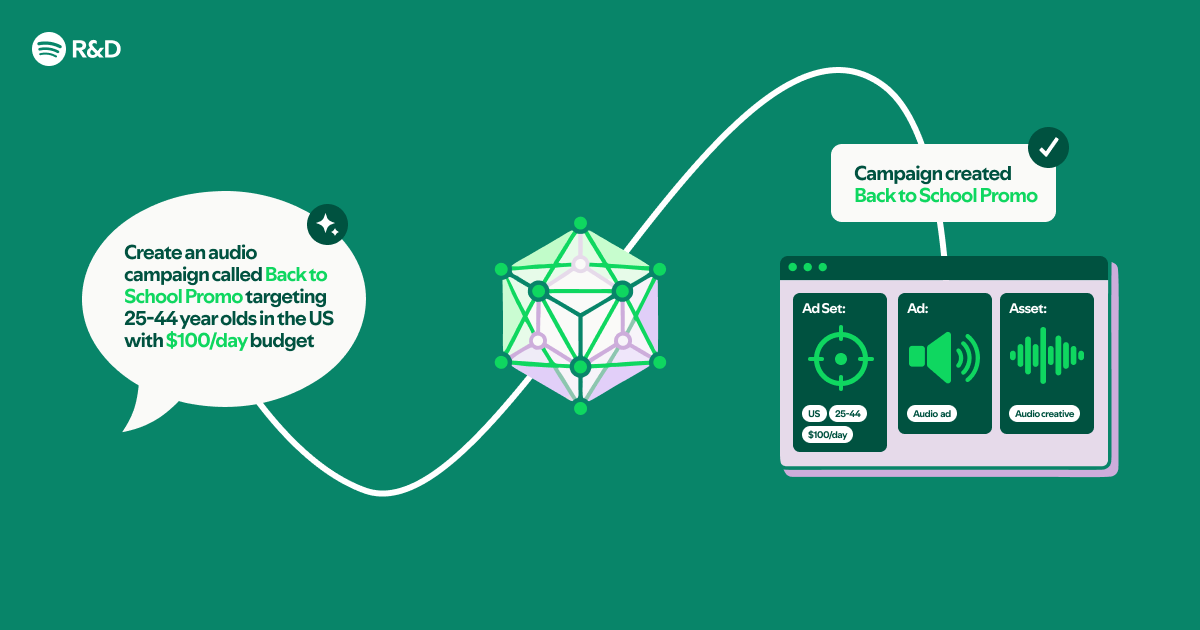
The interface converts complex ad operations into simple queries. Users can create new campaigns, adjust bids, pause ads, or analyze performance metrics by typing or speaking natural language. For example, "Create a campaign targeting 18-24 year olds in New York with a daily budget of $50" translates into the appropriate API sequence. This makes the Spotify Ads API accessible to marketing teams without engineering support, democratizing ad management and speeding up routine tasks.
5. How Claude Code Plugins Enable Natural Language Queries
Claude Code Plugins act as an intermediary that converts user intent into structured API calls. The plugin uses large language models to parse natural language, identify entities (like campaign names or budget amounts), and map them to API parameters. It then executes the request and formats the response in an easy-to-understand way. Under the hood, the plugin may use chain-of-thought reasoning to handle multi-step tasks, such as first retrieving a list of ad sets, then updating one based on user feedback. This capability turns a rigid API into a flexible assistant.
6. Streamlining Ad Campaign Operations
Typical ad management involves repetitive tasks: checking performance, adjusting budgets, A/B testing creatives. With a natural language interface, these operations become conversational. For instance, a user can ask, "Which ad sets had the highest click-through rate yesterday?" followed immediately by, "Increase their budget by 20%." The plugin remembers context, so you don't need to restate parameters. This streamlined workflow reduces cognitive load and allows marketers to focus on strategy rather than tool navigation.

7. Error Handling and User Feedback in Conversations
Errors are inevitable in API interactions—invalid parameters, rate limits, authentication issues. The natural language interface can handle these gracefully by explaining the problem in plain terms. For example, if a user tries to set a budget below the minimum, the plugin might say, "The minimum daily budget for this campaign type is $10. Please set a value of $10 or higher." This feedback loop is powered by the documentation and error schemas in the OpenAPI spec, making troubleshooting intuitive and reducing the need for support tickets.
8. Customizing the Interface for Specific Advertiser Needs
Not all advertisers require the same functionality. The plugin can be customized by selecting which parts of the OpenAPI spec and Markdown docs to expose. For instance, a small business might only need campaign creation and performance reports, while an agency might require bulk operations across multiple accounts. By tailoring the specification files, you control the conversation scope—keeping the interface simple for some users and advanced for others—all without altering any compiled code.
9. Security Considerations When Exposing API via Chat
Using a conversational interface introduces new security challenges. The plugin must handle authentication tokens, user permissions, and data privacy. For example, it should ensure that a user only queries campaigns they own. Claude Code Plugins can integrate with existing authorization flows by prompting for credentials at the start of a session and then securely storing them. Additionally, the natural language layer should sanitize inputs to prevent injection attacks and log interactions for audit trails. These safeguards are crucial when moving from server-to-server API calls to human-facing chats.
10. Future Possibilities and Extensions
The approach described here is not limited to Spotify Ads. Any API described by an OpenAPI spec and supplemented with Markdown docs can be turned into a natural language interface using Claude Code Plugins. Future extensions could include multi-modal interactions (voice commands, charts in responses), proactive notifications (e.g., "Your campaign is underperforming, would you like to pause it?"), and integration with other tools like Slack or Teams. This opens up a world where software interfaces are no longer static screens but dynamic conversations.
Building a natural language interface to the Spotify Ads API with Claude Code Plugins is a testament to how far AI has come in bridging the gap between technical systems and human communication. By using OpenAPI specs and Markdown as the only building blocks, you create a tool that is both powerful and remarkably simple to maintain. Whether you're a solo entrepreneur or part of a media agency, this approach can streamline your ad operations and give you back time to focus on creative strategy.