10 Key Insights About the AWS MCP Server Launch
AI agents are transforming how we build on AWS, but giving them secure, authenticated access has always been a challenge. With the general availability of the AWS MCP Server, that changes. This managed remote Model Context Protocol (MCP) server offers a small, fixed set of tools that let AI coding assistants interact with AWS services safely. Here are the ten essential things you need to know about this new offering.
1. What the AWS MCP Server Is
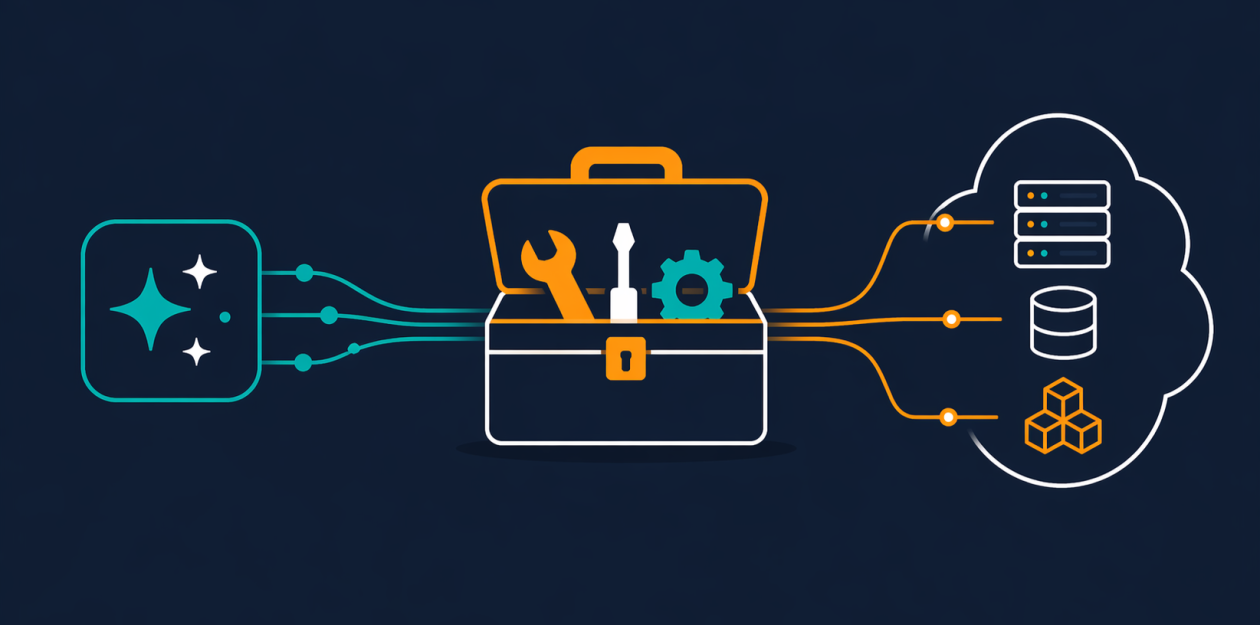
The AWS MCP Server is a managed remote server that implements the Model Context Protocol (MCP). It gives AI agents and coding assistants secure, authenticated access to all AWS services through a compact set of tools. Part of the Agent Toolkit for AWS, it includes the MCP Server itself, along with skills and plugins designed to help coding agents build more effectively on AWS. This solves the long-standing problem of how to grant agents real AWS access without compromising security.
2. Why AI Agents Struggle With AWS
AI coding agents are useful but face critical limitations when working with AWS at any meaningful depth. Without access to current documentation, they rely on training data that can be months out of date—missing new services like Amazon S3 Vectors or Amazon Aurora DSQL. When building infrastructure, they default to the AWS CLI instead of the AWS CDK or CloudFormation, and they generate IAM policies that are far too broad. The result is infrastructure that works in a demo but is not production-ready. The AWS MCP Server directly addresses these gaps.
3. The Core Tool Set Does Not Burn Context
The server provides a small, fixed set of tools that do not consume your model’s context window. The call_aws tool executes any of over 15,000 AWS API operations using your existing IAM credentials. When new APIs launch, they are supported within days. The search_documentation and read_documentation tools fetch the latest AWS documentation and best practices at query time, so the agent always works with up-to-date information. This keeps the agent lightweight and efficient.
4. IAM Context Keys for Fine-Grained Access
With general availability, the AWS MCP Server now supports IAM context keys. This means you no longer need a separate IAM permission to use the server itself. Instead, you can express fine-grained access in a standard IAM policy. For example, you can restrict an agent to only read specific S3 buckets or invoke certain Lambda functions. This makes it much easier to apply the principle of least privilege while still enabling powerful agent workflows.
5. Documentation Retrieval No Longer Requires Authentication
Previously, even reading AWS documentation through the server required authentication. As part of the GA release, documentation retrieval is now unauthenticated. Any agent can access up-to-date AWS docs without needing IAM credentials. This is a significant improvement because it reduces friction for agents that need to look up API details or best practices before making calls. It also speeds up initial setup and testing.
6. Reduced Token Consumption for Complex Workflows
The server has been optimized to reduce the number of tokens required per interaction. This is especially important for complex, multi-step workflows where agents need to call multiple APIs or ask follow-up questions. By minimizing token usage, the AWS MCP Server helps keep costs down and allows models to stay focused on the task rather than managing context limits. This efficiency gain is a direct result of the compact tool design.

7. The New run_script Tool for Server-Side Processing
One of the most powerful additions is the run_script tool. It allows an agent to write a short Python script that executes server-side in a sandboxed environment. The sandbox inherits your IAM permissions but has no network access. This means you can give an agent the ability to process data without ever granting access to your local file system or a shell. For tasks that require chaining multiple API calls and filtering results, run_script does everything in a single round-trip—faster and more context-efficient than doing each call separately.
8. Skills Replace Agent SOPs
The transition from Agent SOPs to Skills is the most significant addition. Skills provide curated guidance and best practices for specific tasks. Instead of generic step-by-step instructions, Skills offer tailored, up-to-date recommendations that help agents build more effectively. For example, a Skill might guide an agent on the best way to set up an Amazon Bedrock knowledge base or deploy a serverless application. Skills make the agent more autonomous and accurate.
9. Production-Ready Infrastructure by Default
By addressing the common pitfalls of AI-generated AWS infrastructure, the AWS MCP Server helps produce production-ready results from the start. Agents using the server generate policies that follow least privilege, use modern infrastructure-as-code tools like CDK, and stay current with documentation. This reduces the gap between demo-quality code and something you would actually deploy. The result is faster development cycles with fewer security and compliance issues.
10. Future-Proof With Rapid API Support
The AWS MCP Server is designed to stay ahead of new AWS service launches. When a new API becomes available, it is supported within days—not months. This is possible because the call_aws tool works with any AWS API operation that your IAM credentials allow. You don't need to wait for model retraining or plugin updates; the agent can start using new services almost immediately. This makes the server a durable solution for long-term AI agent deployments.
The AWS MCP Server transforms how AI agents interact with AWS by combining security, efficiency, and up-to-date knowledge. Whether you are building prototypes or production systems, this toolkit helps you avoid common pitfalls and accelerate development. With its growing set of Skills and strong security model, it's a foundational piece for the future of AI-assisted cloud engineering.