Unlocking the Cambrian Explosion: What New Fossil Discoveries Reveal About Early Animal Evolution
Around 540 million years ago, during the dawn of the Cambrian Period, Earth's oceans teemed with bizarre life forms—tiny worm-like creatures sifting through sediment, blind swimmers with whiplash tentacles, and the earliest ancestors of modern mollusks, sponges, and jellyfish. Yet much of this primordial world remained hidden until a series of remarkable fossil discoveries in recent years. These treasure troves are forcing scientists to rewrite the story of early animal evolution, offering unprecedented glimpses into the 'Cambrian explosion' when most major animal groups first appeared. Below, we explore key questions about these findings and what they mean for our understanding of life's origins.
What is the Cambrian Explosion and why is it important?
The Cambrian Explosion refers to a relatively brief geological period, roughly 541 to 485 million years ago, when most major animal phyla appeared in the fossil record in a sudden burst of evolutionary innovation. Before this, life was mostly microbial or simple multicellular organisms. During the Cambrian, complex body plans—such as trilobites, arthropods, mollusks, and chordates—emerged alongside novel features like eyes, limbs, and hard shells. This event is crucial because it set the stage for all subsequent animal evolution, including the lineage that eventually led to humans. Recent fossil discoveries, especially those preserving soft tissues, are revealing that the explosion was even more diverse and rapid than previously thought, with many bizarre forms that don't fit neatly into modern categories.
Where have these remarkable Cambrian fossil sites been found?
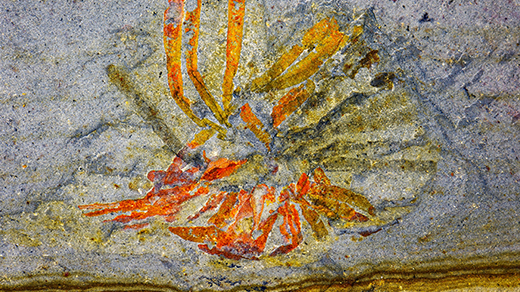
Several extraordinary fossil deposits, known as Lagerstätten, capture the soft-bodied organisms of the Cambrian with exceptional detail. The most famous is the Burgess Shale in British Columbia, Canada, discovered in 1909 and systematically studied over the past century. It preserves a slice of marine life from about 508 million years ago. More recently, the Chengjiang fauna in Yunnan, China, dating to ~518 million years, has yielded even older and often better-preserved specimens. Other important sites include the Sirius Passet in Greenland and the Emu Bay Shale in Australia. Each deposit provides a unique window into different environments and communities, collectively painting a more complete picture of early animal ecosystems.
What strange creatures lived during the Cambrian?
The Cambrian seas were home to an astonishing array of alien-looking animals. Among them were Hallucigenia, a small worm-like creature with paired spines and tentacles that scientists initially mistook for walking legs; Anomalocaris, a fearsome swimming predator with grasping appendages and a circular mouth lined with teeth; and Opabinia, which had five eyes and a long, claw-like proboscis. Other oddities include Wiwaxia, covered in overlapping scales and spines, and Pikaia, a primitive chordate resembling a modern lancelet. Many of these forms represent early experiments in animal body design that did not survive the Cambrian explosion, but their fossils are crucial for understanding how evolution tinkered with anatomy.
How are these fossils transforming our understanding of evolution?
The treasure trove of Cambrian fossils has upended earlier linear views of evolution. Instead of a straightforward progression from simple to complex, the evidence now shows an early burst of experimentation, with many lineages appearing nearly simultaneously, then disappearing or evolving along unique paths. For instance, the discovery that some Cambrian worms had simple limbs or gill-like structures suggests that key innovations like segmentation and nervous system organization arose earlier and more broadly than assumed. The fossils also reveal complex ecological interactions—like predation, burrowing, and filter-feeding—that were previously thought to have evolved much later. This has forced paleontologists to rethink the drivers of evolution during the Cambrian: rather than gradual change, a combination of environmental triggers, genetic toolkits, and ecological feedback loops may have triggered this rapid diversification.
What techniques do scientists use to study these delicate fossils?
Studying Cambrian soft-bodied fossils requires specialized techniques because the delicate tissues are often preserved only as carbon films or impressions in fine-grained sediment. Traditional methods include careful mechanical preparation under microscopes and acid etching to free fossils from matrix. Modern technologies have dramatically expanded what can be learned: CT scanning and synchrotron X-ray tomography produce high-resolution 3D images of internal structures, revealing details like gut contents, muscle fibers, and even nerve cords. Electron microscopy shows surface features at the micron scale. Geochemical analyses (like isotopic signatures) help interpret the environment of preservation. These approaches allow paleontologists to reconstruct not just the shape but also the biology and ecology of these ancient animals, often leading to revised interpretations of evolutionary relationships.
Why are soft-bodied Cambrian fossils so rare?
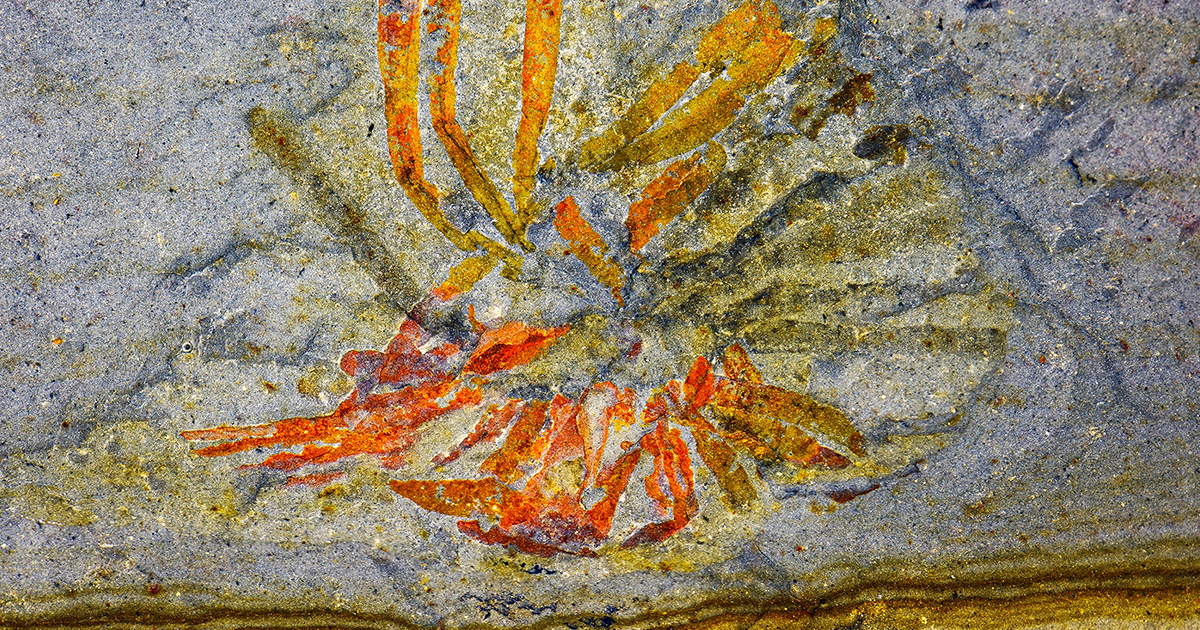
Soft-bodied fossils are extremely rare because the tissues decay quickly after death, usually before they can be buried and preserved. The exceptional preservation seen at Burgess Shale, Chengjiang, and similar sites requires a perfect storm of conditions: rapid burial by fine sediment (often from underwater mudslides) that smothers organisms and prevents scavenging; low oxygen levels in the sediment water, which slows decay and deters bacteria; and the presence of minerals like calcium phosphate or clay coatings that replicate soft parts in fine detail. Such combinations are uncommon, which is why only a handful of these Lagerstätten exist. Each new discovery is precious because it opens a unique window onto a once-living community, capturing rare snapshots of early animal life that would otherwise be lost to time.
What can these fossils tell us about early animal ecosystems?
Beyond individual anatomy, Cambrian fossil deposits provide a census of whole communities, revealing how different species interacted. For example, the presence of burrows alongside trilobites indicates that sediment churning was already a key innovation that oxygenated seafloors. Coprolites (fossilized feces) show what predators were eating—sometimes containing fragments of other Cambrian animals. The spatial arrangement of fossils on bedding planes suggests ecological zonation, with different species living at different water depths. Such data help reconstruct food webs: Anomalocaris as top predator, Hallucigenia as a bottom dweller feeding on organic debris, and numerous filter-feeders like sponges. These ecosystems appear to have been surprisingly complex, with niche partitioning and possible symbioses, challenging the notion that early life was simple or chaotic.
How do Cambrian animals compare to modern life forms?
While many Cambrian animals belong to phyla that survive today (e.g., mollusks, arthropods, chordates), their appearance was often radically different. Early mollusks, for instance, were small, shell-less, worm-like forms compared to modern snails and clams. Pikaia may look like a simple worm, but it has a notochord—a backbone precursor—making it an early relative of vertebrates. Other Cambrian creatures, however, belong to extinct phyla with no living descendants, like the Anomalocaris group (dinocarids). These 'failed experiments' highlight that evolution is not a ladder to perfection but a bush of many branches. The survival of some lineages and extinction of others was partly due to environmental changes, competition, and chance. Thus, studying Cambrian fossils helps us understand the deep origins of today's biodiversity and the contingency of evolutionary history.