Pinecone Unveils Nexus Knowledge Engine, Signaling the End of RAG for Agentic AI
Breaking: Pinecone Launches Nexus, a New Knowledge Layer for Agentic AI
Pinecone today announced Nexus, a knowledge engine designed specifically for agentic AI, marking a definitive shift away from the retrieval-augmented generation (RAG) pipeline that has dominated the AI landscape. The company positions Nexus as a replacement for RAG—not an upgrade—to meet the needs of autonomous agents that operate without human intervention.
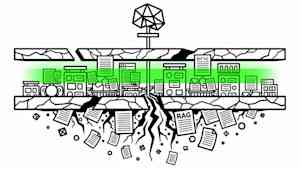
The announcement comes as a VentureBeat Q1 2026 Pulse survey reveals that standalone vector databases are losing adoption, while hybrid retrieval intent has tripled to 33.3%. Pinecone itself is pivoting from its roots as a vector database pioneer to address this market shift.
Nexus introduces two core components: a context compiler that transforms raw enterprise data into persistent, task-specific knowledge artifacts, and a composable retriever that delivers those artifacts with field-level citations and deterministic conflict resolution. Alongside it, Pinecone released KnowQL, a declarative query language enabling agents to specify output shape, confidence thresholds, and latency limits.
In internal benchmarks, a financial analysis task that previously consumed 2.8 million tokens was completed by Nexus with only 4,000 tokens—a 98% reduction. However, Pinecone has not yet validated these results in production deployments. Nexus enters early access today.
“RAG was built for human users. Nexus was built for agentic users, because their language is very different. The responses they expect are very different. The task that an agent is assigned to do is very different from what a chatbot is supposed to do.” — Ash Ashutosh, CEO, Pinecone
Background: Why RAG Falls Short for Agentic AI
RAG, which retrieves documents and passes them to a language model at inference time, was designed for one-off queries with a human in the loop. But agents work differently: they are assigned tasks, not questions. Completing a task requires assembling context from multiple sources, resolving conflicts, tracking what has already been retrieved, and deciding what to query next.
Each agent session currently starts cold, with no compiled understanding of the enterprise data estate—which tables relate to which, which sources are authoritative, and which formats downstream agents can consume. Pinecone estimates that 85% of agent compute effort goes to this re-discovery cycle rather than task completion, leading to unpredictable latency, runaway token costs, and non-deterministic results.
“At the heart of all this stuff was a very simple problem: You’re asking agents—machines—to work on systems and data that was designed for humans.” — Ash Ashutosh, Pinecone CEO
What This Means for Enterprise AI
The Nexus approach shifts the burden from runtime retrieval to pre-compiled knowledge artifacts. By doing so, it reduces token consumption by up to 98% on certain tasks, cuts latency, and ensures deterministic outputs—critical for financial, legal, and operational applications where consistency matters.
For enterprises, this could dramatically lower the cost of running agentic workflows and accelerate deployment timelines. However, the technology is in early access and production validation is pending. If proven, Nexus could become the standard knowledge layer for agentic AI, rendering traditional RAG pipelines obsolete.
The market is already responding: hybrid retrieval strategies are the fastest-growing segment in the dataset, and standalone vector databases are losing share. Pinecone’s pivot may signal a broader industry move toward purpose-built infrastructure for autonomous agents. As agentic AI expands into more critical business functions, the efficiency and reliability of knowledge retrieval will become a competitive differentiator.